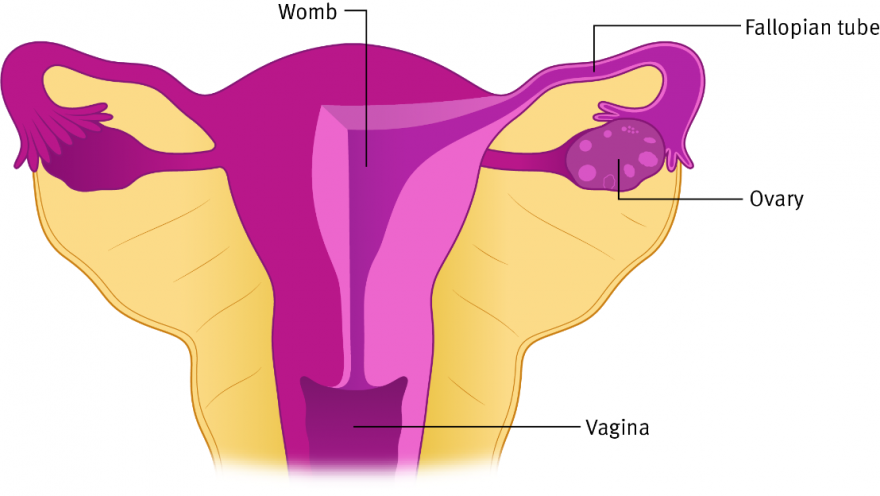
How Are Ovarian Cancers Formed / Ovarian Cancer : This is the most common form of ovarian cancer and occurs primarily in adults.. Ovarian cancer is a disease in which cancer starts in the cells of the ovary. This type of cancer is most likely to spread to the liver, the fluid around the lungs, the spleen, the intestines, the brain, skin or lymph nodes outside of the abdomen. Ovarian epithelial cancer is the most common type of ovarian cancer. Most ovarian cancers have several acquired mutations. Md anderson is one of the nation's leading referral centers for diagnosis and treatment of rare ovarian cancers.
Ovarian cancer is when abnormal cells in the ovary begin to multiply out of control and form a tumor. Ovarian cancer accounts for just 2.5% of all female cancer cases, but 5% of cancer deaths because of the disease's low survival. Treatment of ovarian cancer usually involves a combination of surgery and chemotherapy. In the simplest of terms, germ cells are the cells that form eggs, dr. Epithelial cell tumors account for the majority of ovarian tumors.
Twist1 Downregulation Inhibits Angiogenesis In Ovarian Cancer Cells Download Scientific Diagram from www.researchgate.net Most ovarian tumors are epithelial cell tumors. There are three types of ovarian tumors, each named for the tissue in which they are found: Your ovaries have three main types of cells, and a tumor can develop in any of them. Cancer develops when genes that control cell growth mutate and start growing abnormally. There are three main types of ovarian tumors: Ovarian cancer diagnosed and 14,070 ovarian cancer deaths in the us. Stromal tumors start from structural tissue cells that hold the ovary together and produce the female hormones estrogen and progesterone. In the case of ovarian cancer, stromal tumors form in the tissues that support the ovaries.
Most ovarian tumors are epithelial cell tumors.
Stromal cell ovarian cancer, which arises from connective tissue cells, is very rare. This is largely because 4 out of 5 ovarian cancer patients are diagnosed with advanced disease that has spread throughout the abdominal cavity. Ovarian cancer is when abnormal cells in the ovary begin to multiply out of control and form a tumor. This type of ovarian cancer is often found in early stages. Ovarian epithelial cancer is the most common type of ovarian cancer. Cancer has spread to organs and tissues outside the abdomen, including lymph nodes in the groin. As a rule, the lower the number, the less the cancer has spread. Early stage ovarian cancer rarely causes symptoms. Start here to find information on ovarian cancer treatment, causes and prevention, screening, research, and statistics. Treatment for stage iii ovarian cancer is the same as for stage ii ovarian cancer: About 10% to 15% of ovarian tumors are considered rare, accounting for fewer than 3,500 new cases each year in the united states. Most ovarian cancers have several acquired mutations. Many people with early ovarian cancer have no signs or symptoms of the condition.
Of the cancerous stromal tumor subtypes, most are granulosa cell tumors. This type of cancer is most likely to spread to the liver, the fluid around the lungs, the spleen, the intestines, the brain, skin or lymph nodes outside of the abdomen. The american cancer society relies on information from the seer* database, maintained by the national cancer institute (nci), to provide survival statistics for different types of cancer. As a rule, the lower the number, the less the cancer has spread. Treatment of ovarian cancer usually involves a combination of surgery and chemotherapy.
Types Of Ovarian Cancer Target Ovarian Cancer from targetovariancancer.org.uk A small percentage of ovarian cancers are caused by gene mutations you inherit from your parents. Because of this, ovarian cancer often goes undetected until it has spread. Md anderson is one of the nation's leading referral centers for diagnosis and treatment of rare ovarian cancers. If left untreated, the tumor can spread to other parts of the body. Many people with early ovarian cancer have no signs or symptoms of the condition. A higher number, such as stage iv, means cancer has spread more. These tumors form from cells that cover the surface of the ovary. Of the cancerous stromal tumor subtypes, most are granulosa cell tumors.
Many people with early ovarian cancer have no signs or symptoms of the condition.
About 10% to 15% of ovarian tumors are considered rare, accounting for fewer than 3,500 new cases each year in the united states. Ovarian cancer is a form of cancer that occurs due to abnormal and uncontrolled cell growth in the ovaries. It ranks fourth in cancer deaths among women and causes more deaths than any other cancer of the female reproductive system. When present, symptoms are often nonspecific and blamed on other, more common conditions. There are two substages, a and b: Ovarian cancer stages range from stage i (1) through iv (4). The genes known to increase the risk of ovarian cancer are called breast cancer gene 1 (brca1) and breast cancer gene 2 (brca2). This type of cancer is most likely to spread to the liver, the fluid around the lungs, the spleen, the intestines, the brain, skin or lymph nodes outside of the abdomen. The stromal cells are the cells that form the substance of the ovary, the germ cells are the cells that become the eggs, and the epithelial cells are the cells that make up the outer layer of the ovary. Ovarian cancer is a disease in which cancer starts in the cells of the ovary. If left untreated, the tumor can spread to other parts of the body. A small percentage of ovarian cancers are caused by gene mutations you inherit from your parents. For very early stage cancer that hasn't spread beyond one ovary, surgery may involve removing the affected ovary and its fallopian tube.
It ranks fourth in cancer deaths among women and causes more deaths than any other cancer of the female reproductive system. Ovarian epithelial cancer is the most common type of ovarian cancer. Epithelial cell tumors account for the majority of ovarian tumors. About 10% to 15% of ovarian tumors are considered rare, accounting for fewer than 3,500 new cases each year in the united states. A higher number, such as stage iv, means cancer has spread more.
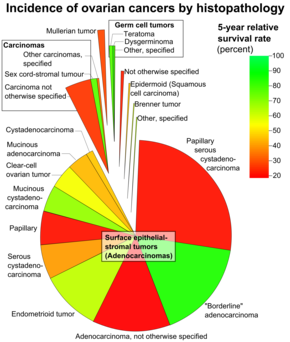
Ovarian Cancer Wikipedia from upload.wikimedia.org Germ cell ovarian cancer arises from the reproductive cells of the ovaries, and is rare. In about 90 percent of cases, ovarian cancer occurs after age 40, and most cases occur after age 60.\n\nthe most common form of ovarian cancer begins in. Ovarian cancer begins when the healthy cells in the ovaries change and grow uncontrollably and form a tumor. A higher number, such as stage iv, means cancer has spread more. American cancer society stage 3 treatment. Ovarian cancer is a disease in which cancer starts in the cells of the ovary. Ovarian cancer diagnosed and 14,070 ovarian cancer deaths in the us. Metastatic ovarian cancer is an advanced stage malignancy that has spread from the cells in the ovaries to distant areas of the body.
Stage iv cancer is the most advanced form of ovarian cancer.
It forms on the surface of the ovary in the epithelial cells or from the fallopian tube. Ovarian cancer diagnosed and 14,070 ovarian cancer deaths in the us. Germ cell ovarian cancer arises from the reproductive cells of the ovaries, and is rare. Your ovaries have three main types of cells, and a tumor can develop in any of them. Cancer can also form at the end of the fallopian tube near the ovary or the peritoneum and spread to the ovary. Germ cell ovarian cancer cases make up less than 2% of all ovarian cancer diagnoses, according to the acs. Operations to remove ovarian cancer include: Ovarian cancer is a disease in which cancer starts in the cells of the ovary. Epithelial cell tumors account for the majority of ovarian tumors. The american cancer society relies on information from the seer* database, maintained by the national cancer institute (nci), to provide survival statistics for different types of cancer. Treatment according to the nocc , surgery to diagnose and remove the cancer is the most common treatment for. Stage iv cancer is the most advanced form of ovarian cancer. Because of this, ovarian cancer often goes undetected until it has spread.